Wednesday, October 10, 2012

Christopher Columbus: Champ or Chump


For most of the past 500 years, Christopher Columbus (1451-1506) has been widely regarded as a great discoverer – the Admiral of the Ocean Sea. The Spanish histroican Francisco Lopes de Gomorra called the voyage of Columbus to the New World “the greatest event sicne the creation of the world.” Columbus has left a considerable historic legacy; there is a country named after him (Colombia), a Canadian province (British Columbia), two national capitals (Colombo, Sri Lanka and Washington, District of Columbia, USA), and a major River (Columbia). The United States has at times seen him as a national symbol and celebrated a national holiday, Columbus Day, in his honour.
It is known that the first people Columbus met in the Caribbean were the Tainos. They greeted him with great kindness but later suffered under his rule. Two of Columbus’s children, Diego and Ferdinand, sailed with him to the New World and one wrote a biography of his father.
Many people have begun to question the celebrated fame of this sailor from Genoa, Italy. Some stories about Columbus are legends and thus not completely (or even largely) true. For example, it is often said that he was a modern thinker who dared to claim that the earth was round, and that those who opposed him were closed-minded, religious fanatics who believed  that the world was flat. In truth, Columbus was not as visionary as this legend suggests – it was already widely accepted at the time of his voyage that the earth was globe-shaped. 
There is no doubt that the world we live in (especially in North America) would be incredibly different if Columbus had not accomplished what he did. That is why he is considered such an important character in history. But now it is your turn. After watching the videos, reading and discussing this dude in class, should Columbus be considered a Champ (hero, courageous, adventurer, explorer) or Chump (promoter of slavery, greedy, misinformed, mean)? Fill out the following survey found here.
Want to read more before you make up your mind? Click here

Wednesday, April 6, 2011

Residential Schools

Great website for more inquiry: http://www.wherearethechildren.ca
What is a residential school?

The Canadian government believed it was responsible for educating and caring for the country’s aboriginal people. It thought their best chance for success was to learn English and adopt Christianity and Canadian customs. Ideally, they would pass their adopted lifestyle on to their children, and native traditions would diminish, or be completely abolished in a few generations.

The Canadian government developed a policy called "aggressive assimilation" to be taught at church-run, government-funded industrial schools, later called residential schools. The government felt children were easier to mould than adults, and the concept of a boarding school was the best way to prepare them for life in mainstream society.
Residential schools were federally run, under the Department of Indian Affairs. Attendance was mandatory. Agents were employed by the government to ensure all native children attended.

Eleven hundred students initially attended 69 schools across the country. In 1931, at the peak of the residential school system, there were about 80 schools operating in Canada. They were in every territory and province except Newfoundland, Prince Edward Island and New Brunswick. There were a total of about 130 schools from the earliest in the 19th century to the last, which closed in 1996.

What were the effects of the residential school system?

Residential schools were established with the assumption that aboriginal culture was unable to adapt to a rapidly modernizing society. It was believed that native children could be successful if they assimilated into mainstream Canadian society by adopting Christianity and speaking English or French. Students were discouraged from speaking their first language or practising native traditions. If they were caught, they would experience severe punishment.

Throughout the years, students lived in substandard conditions and endured physical and emotional abuse. There are also many allegations of sexual abuse. Students at residential schools rarely had opportunities to see examples of normal family life. They were in school 10 months a year, away from their parents. All correspondence from the children was written in English, which many parents couldn't read. Brothers and sisters at the same school rarely saw each other, as all activities were segregated by gender.

When students returned to the reserve, they often found they didn't belong. They didn't have the skills to help their parents, and became ashamed of their native heritage. The skills taught at the schools were generally substandard; many found it hard to function in an urban setting. The aims of assimilation meant devastation for those who were subjected to years of mistreatment.

In 1990, aboriginal leader Phil Fontaine called for the churches involved to acknowledge the physical, emotional, and sexual abuse endured by students at the schools. In 1991 the government convened a Royal Commission on Aboriginal Peoples. Many people told the commission about their residential school experiences, and its 1996 report recommended a separate public inquiry into residential schools. That recommendation was never followed.
What is the Truth and Reconciliation process?
The Truth and Reconciliation process is an initiative meant to raise awareness of the impact on human dignity caused by the residential school experience. The goal is to create a shared narrative of former students and their families in a culturally appropriate environment.

The approach is known as a form of "restorative justice," which differs from the customary adversarial and retributive justice. The truth and reconciliation process seeks to heal relations between opposing sides by uncovering facts, distinguishing truth from lies, and allowing for acknowledgement, appropriate public mourning, forgiveness and healing. Sixty million dollars will be allocated to the creation of a Truth and

Apology by the Anglican Church --1993
My Brothers and Sisters:

"Together here with you I have listened as you have told your stories of the residential schools. I have heard the voices that have spoken of pain and hurt experienced in the schools, and of the scars which endure to this day. I have felt shame and humiliation as I have heard of suffering inflicted by my people, and as I think of the part our church played in that suffering. I am deeply conscious of the sacredness of the stories that you have told and I hold in the highest honour those who have told them. I have heard with admiration the stories of people and communities who have worked at healing, and I am aware of how much healing is needed. I also know that I am in need of healing, and my own people are in need of healing, and our church is in need of healing. Without that healing, we will continue the same attitudes that have done such damage in the past. I also know that healing takes a long time, both for people and for communities. I also know that it is God who heals, and that God can begin to heal when we open ourselves, our wounds, our failures and our shame to God. I want to take one step along that path here and now. I accept and I confess before God and you, our failures in the residential schools. We failed you. We failed ourselves. We failed God. I am sorry, more than I can say, that we were part of a system which took you and your children from home and family. I am sorry, more than I can say, that we tried to remake you in our image, taking from you your language and the signs of your identity. I am sorry, more than I can say, that in our schools so many were abused physically, sexually, culturally and emotionally. On behalf of the Anglican Church of Canada, I present our apology."

What do you think about this apology? Does it go far enough? Does this seem like an easy way out of this situation?

Tuesday, April 5, 2011

Colonialism comes to Canada

This first videos gives a brief history of early Canada. It's quick so pay close attention to the details:
this

Pages 119 - 128 in your textbook give some pictures of what life was like before European contact in North America. Be sure to review these pages before the unit test. Life was significantly different for First Nations peoples of Canada before Europeans arrived.
Based on what you've read in your text and the material we have covered in the video presentations answer the following question in the comment section below:
1. First Nation's lifestyle was significantly different before Europeans arrived. Describe two of these ways of life that have impressed you. Why have these practices faded away? Do you think it would be good to bring back these practices in some way? If so how? If not why not?
2. Read over the timeline Residential Schools in Canada given on page 183. Also read through the FAQ's of the Truth and Reconciliation Commission found at this link. Based on this information and the video we watched in class, explain how the ideas of the White Man's Burden might have lead to residential schools? How did residential schools affect First Nations people? What do you think an appropriate response would be to the experiences that First Nations people had in residential schools?

Conquistadora the Explorer

Assimilation

Definitions :-the act or process by which a sound becomes identical with or similar to a neighboring sound in one or more defining characteristics, as place of articulation, voice or voicelessness, or manner of articulation . http://dictionary.reference.com/browse/assimilation
-the absorption of a minority group by a dominant group.
Explication:- taking a lesser group and making them more like a more dominant group.
Metaphor : - this picture the red apple would be the minority group and the green apples would be the more dominant group. the red apple ( minority group) is being absorbed by the green apples (dominant group).
posted by Kassidy

New Imperialism: From G's to B's

Early Imperialism was motivated by:
Gold (Goods) - getting the raw (and often exotic) materials from the new world colonies to produce wealth for the Empire/nation. (Think: mercantilism and slave trade)
Glory - discovering new parts of the world and claiming new territory for your expanding Empire/nation. (Think: Columbus or Sir Francis Drake)
God - converting as many people to Christianity as possible. (Think: missionaries.)
The New Imperialism had new motivations shaped by the new realities in the world.
Capitalism and the Industrial Revolution changed the economic landscape. Now the motivation to get raw materials was driven by European business owners (aristocrats). The methods of turning raw materials into manufactured goods were improving because of new inventions. Factories started to produce more stuff using relatively cheap labour. The bigger the business the better. Making a profit for your company became the most important thing. Colonies started to get upset with having to buy everything from the Mother Country when they could produce the same products themselves usually for cheaper.
The old motivation of Gold had now shifted to the Bottom Line

The old idea of Glory was wearing thin as well. Empires now realized the difficulty of keeping control of distant colonies that were starting to get politically unstable. Great Britain lost the American colonies and other colonies like India were close to gaining independance through force as well. Expanding the empire was no longer the concern. Now it was all about the pride of keeping as many colonies as possible and preserving as much of the empire as possible. Preserving the Empire became a major focus. Even much later on people like Winston Churchill refused to accept that the British Empire was going to fall apart.
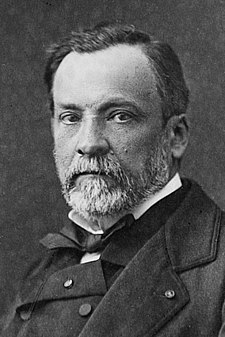
Louis Pasteur
"I have not become the King’s First Minister in order to preside over the liquidation of the British Empire."
Glory and recognition now shifted to individuals. New scientific discoveries in medicine were made by people like Louis Pasteur (he is responsible for all those vacine shots you got as a kid). Charles Darwin made trips out to remote islands in the Pacific Ocean and then wrote the Origin of Species where he laid out the basic ideas in the theory of evolution.
The old motivation of Glory had now turned into something more like Bragging Rights
The old motivation to convert as many people for God had also some of its importance. Missionaries had been motivated to teach savages how to live good moral lives according Christian standards. While the drive to convert people remained, the idea of being superior to the ethnic groups found in the colonies expanded beyond just religion. This eurocentric and ethnocentric perspective was driven by the perception that Europeans were generally more advanced people. European advancement in production, new inventions, scientific discoveries, and sophisticated philosophies reinforced the idea that Europeans were better than other people groups. From that point of view it became the European's responsibility to 'help' the 'backward' people to become more European. A British writer named Ruyard Kipling captured the idea of European responsibility to the rest of the 'savage world'...
Take up the White Man's burden--
Send forth the best ye breed--
Go bind your sons to exile
To serve your captives' need;
To wait in heavy harness,
On fluttered folk and wild--
Your new-caught, sullen peoples,
Half-devil and half-child.

Take up the White Man's burden--

And reap his old reward:
The blame of those ye better,
The hate of those ye guard--
The cry of hosts ye humour
(Ah, slowly!) toward the light:--
"Why brought he us from bondage,
Our loved Egyptian night?"
This poem demonstrates how Europeans considered themselves parents to the other races. Any resistance that Europeans faced from the colonies or other racial groups was seen as the burden they had to bear.
This advertizement for soap shows that cleanliness was seen as something that made white people better than other people groups. It seems crazy to think that a soap company could see itself as helping to 'clean' the dirt of the savages in other parts of the world. But in this eurocentric point of view everyone need to bear the white man's burden.
To the old motivation of God was now added a European or White Man's Burden.
It is easy to criticize the over inflated sense of superiority that dominated European Imperialism. This written response is intended to help you imagine what it would be like to have such a strong eurocentric perspective.

Imagine you are a British doctor who has recently accepted a position in a remote hospital in interior of India in the late 1800s. You have been taught the eurocentric values throughout your schooling. Everything has prepared you to do your duty to help these 'half-devil and half-child' type of people. You have been living in this remote village for several months. Write a letter to your mother and father about your experiences. Remember to tell them about how conditions in your village are different from life back home in England. Also remember to tell them why your work there is so important.

Monday, April 4, 2011

Eurocentrism

Definitions
1. A belief that the European worldview is superior to all others. (From Textbook)
2. The practice of viewing the world from a European perspective and with an implied belief, either consciously or subconsciously, in the preeminence of European culture. (From Wikipedia)
Explanation:
Eurocentrism is the belief that the Europeans had that they were, in their view, more advanced and more civilized. They saw the indigenous people from all around the world, like Africa Asia and the Americas, as lesser human beings than them and they would conquer their lands, they took them as slaves and treated them like animals. This resulted in the death and suffering of countless indigenous peoples.
Metaphor:
A person who was raised on white sugar and has only ever had white sugar. Even though he has never tried any kind of brown sugars, he still believed that white sugar was way sweeter and tasted better. He believes that anybody who ate the dirty brown sugar wasn’t as good as him, and their sugar was even expendable.

Sunday, April 3, 2011

a letter home

[Marie de l”incarnation was an Ursuline nun who worked closely with the Jesuits in the early days of the colony].
It is a singular consolation to us to deprive ourselves of all that is most necessary in order to win souls to Jesus Christ, and we would prefer to lack everything rather than leave our girls in the unbearable filth they bring from their cabins. When they are given to us, they are naked as worms and must be washed from head to foot because of the grease their parents rub all over their bodies; and whatever diligence we use and however often their linen and clothing is changed, we cannot rid them for a long time of the vermin caused by this abundance of grease. A Sister employs part of each day at this. It is an office that everyone eagerly covets. Whoever obtains it considers herself rich in such a happy lot.
Besides the Savage women and girls, whom we receive in the house, the men visit us in the parlour, where we try to give them the same charity we do their women, and it is a very sensible consolation to us to take bread from our mouths to give it to these poor people, in order to inspire them with love for Our Lord and for his holy Faith.
It is a very special providence of this great God that we are able to have girls after the great number of them that died last year. This malady, which is smallpox, being universal among the Savages, it spread to our seminary, which in a very few days resembled a hospital. All our girls suffered this malady three times and four of them died from it. We all expected to fall sick, because the malady was a veritable contagion, and also because we were day and night succouring them and the small space we had forced us to be continually together. But Our Lord aided us so powerfully that none of us was indisposed.
The Savages that are not Christians hold the delusion that it is baptism, instruction and dwelling among the French that was the cause of this mortality, which made us believe we would not be given any more girls and that those we had would be taken from us. The Savages themselves begged us to take their daughters so that if we had food and clothing we would be able to admit a very great number, though  we are exceedingly pressed for buildings. If God touches the hearts of some saintly souls, so that they will help us build close to the Savages as we have the design to do, we will have a great many girls.

Ethnocentrism

Definitions:
1. The belief that one's own culture is superior to all others and is the standard by which all other cultures should be measured. (http://dictionary.refrence.com/browse/ethnocentrism)
2.The belief in the intrinsic superiority of the nation, culture, or group to which one belongs, often accompanied by feelings of dislike for other groups.(http://dictionary.refrence.com/browse/ethnocentrism)
Explanation:
My explanation of ethnocentrism is the tendancy to believe that one culture or ethnic group is more superior, better or more important than others and they compare others to themselves. Individuals will judge other cultures or groups, especially with language, traditons, behaviors, religion etc.
Metaphor:


What does that food make you think? Delicious? Appetizing? Normal? In Thailand these are regular everyday snacks. If you were offered one would you be grossed out or look down on that person or group? What might be normal for you may not be normal for someone.

Thursday, March 31, 2011

Multiculturalism

Definition:
1. the policy or practice of giving equal attention or representation to the cultural needs and contributions of all the groups in a society: special emphasis may be given to minority groups underrepresented in the past, as through bilingual education. (source: http://www.yourdictionary.com/multiculturalism)
2. the policy of maintaining a diversity of ethnic cultures within a community. (source: http://dictionary.reference.com/browse/multiculturalism)
Explanation:
In my own words I think multiculturalism means to allow people to practice their own culture. The religion a person chooses should be free of choice and the groups in society should support the culture and they get treated equally. Also social and educational programs should encourage interest in many types of cultures and societies not just one main culture.
Metaphor:
Multiculturalism is like a pot of soup. You add all the vegetables etc and mix it together which is like adding all the cultures and mixing them in society and it turns out really good because of the variety of different vegetables. In society it is better with a mix of cultures because it is not just one set culture there is variety.

Commodities

Definitions:
1. A commodity is a good for which there is demand, but which is supplied without qualitative differentiation across a market. (Wikipedia)
2. A physical substance, such as food, grains, and metals, which is interchangeable with another product of the same type, and which investors buy or sell, usually through futures contracts. The priceof the commodity is subject to supply and demand. Risk is actually the reason exchange trading of the basic agricultural products began. For example, a farmer risks the cost of producing a product ready for market at sometime in the futurebecause he doesn't know what the selling price will be.(http://www.investorwords.com/975/commodity.html)
Explanation:
In my own words a commodity is something that is in pretty high demand that everyone wants that hasn't been really prices or anything just what you think it is worth. Your natural response pretty much.

Metaphor
If someone has a pair of keys and you want them you have to figure out what those keys are worth to you and so I might say they are worth 20 bananas. Then I will tell that person how much I would pay for it. Then he would tell me how much he thinks it is worth and then we would bargain.

Slave Trade

Definitions:
1.The business of buying and selling people for profit. (wikianswers)
2.Traffic in slaves; especially in Black Africans transported to America in the 16th to 19th centuriest
(http://www.thefreedictionary.com/slave+trade)
Explanation:

The violent kidnapping of colored people to use as labour workers in hard working conditions to make profit. The black Africans were transported over seas to America.
Metaphor:
Any movie that features white people sailing off to the Third World to capture something living and carry it back to the West for exploitation is going to be seen as a metaphor for colonialism and racism. A good example of this is the movie King Kong. They captured the giant gorilla and took him back to their country to exploit him and make a profit off of him.

Colonialism

Definitions
1. Colonialism is the establishment, maintenance, acquisition and expansion of colonies in one territory by people from another territory. Colonialism is a process whereby sovereignty over the colony is claimed by the metropole and the social structure, government, andeconomics of the colony are changed by colonists - people from the metropole. Colonialism is a set of unequal relationships: between the metropole and the colony, and between the colonists and the indigenous population. (http://en.wikipedia.org/wiki/Colonialism)
2.A political-economic phenomenon whereby various European nations explored, conquered, settled, and exploited large areas of the world. (http://www.britannica.com/EBchecked/topic/126237/colonialism-Western)
Explanation:
A policy where a nation maintains control over foreign dependencies
Metaphor
Colonialism is like being a parent or a boss. The Mom or dad take care of the kids and own what the kids have. The boss owns the buisness and the workers help the boss, but the boss is still in control.

Mercantilism

Definitions
1. from the 16th to the 19th centuries, a system of government-sponsored international business ventures designed to make European monarchs rich.
2. an economic theory that holds the prosperity of a state as dependent upon its supply of capital, that the global volume of international trade is "unchangeable," and that one party may benefit only at the expense of another. -wikipedia.org
Explanation
When one country starts to benefit due to when another country has expenses.
Metaphor
Mercantilism is like monopoly. Everyone wants to own the most land and money, and likes when the other players have to pay them more money and start to go bankrupt. they are gaining from others expenses.

Indian Act

Definitions 1. a band of indians for whose use and benefit the common, lands, the legal title too which is vested in her majesty, have been set apart before , after september 4, 1951. http://laws-lois.justice.gc.ca/eng/acts/I-5/page-1.html
2. is the principal federal statute dealing with INDIAN status, local government management or reserve land and communal monies. http://www.thecanadianencyclopedia.com/index.cfm?PgNm=TCE&Params=A1ARTA0003975
Explanation
Indian act is an act of when the indians started losing thier land to people and to be able to get thier land the government had to offer funds like payments from the government and still be able to use thier land.

Indians use to live off their own pay and work but now they live off the government which is way better then working for themselves because they made money by getting rid of thier land and still get payments from our government.
Click onthis link for more explanation on the Indian Act

Communism

Definitions
1. Communism is a sociopolitical movement that aims for a classless and stateless society structured upon common ownership of the means of production, free access to articles of consumption, and the end of wage labor and private property in the means of production and real estate. (http://en.wikipedia.org/wiki/Communism)
2. A planned economical system in which government owns all means of production and all people work for government-owned and government-run enterprises.
Explanation:
So pretty much its a system where the government owns everything, and everyone gets paid the same =].
Metaphor:
Communism is like the Smurfs. They all look and dress the same, except one who has a beard and dressed in Red, who would be the government.

Capitalism

Definition:
1.Capitalism is an economic system for increasing individual wealth, requiring a relatively free market, open competition, the profit motive, and at least some private ownership of the means of production. (Found in TextBook)
2.Capitalism is an economic and social system in which capital and land, the non-labor factors of production (also known as the means of production), are privately owned; labor, goods and resources are traded in markets; and profit, after taxes, is distributed to the owners or invested in ... (en.wikipedia.org/wiki/Capitalism )
Explanation:
Capitalism is to me when all of the profit that the person makes they take home on how much hours. Individuals have the right to private property and to use it to make money. People naturally compete to gain the most for them selves(humans are essentially greedy) (Found on WorkSheet)
Metaphor:
A basketball team getting paid individually on how hard they play and how often they go on the court. Instead of them getting paid a regular amount.

Wednesday, March 30, 2011

Integration (ethnic)

Definitions
1) Racial integration includes desegregation (the process of ending systematic racial segregation). It includes goals such as leveling barriers to association, that creates equal opportunity no matter what race you are, and the development of a culture that draws on diverse traditions, rather than bringing a racial minority into a majority culture. Integration is a large social matter.
2) Another term is the movement of minority groups such as ethnic minorities, refugees and underprivileged sections of society into the mainstream of society. Members of the minority groups thus gain full access to the opportunities, rights and services available to the members of the mainstream. Both sources wikipedia
Explanation:
In my own words integration is when you move someone who practices a different religion or culture into a place where everyone else is practicing a whole different religion. although the person doesn't do the same thing as everyone else they will still be accepted as part of the society.
This picture represents integration because people that don't share the same race are accepting each other. they don't care that they are not the exact same race, culture, or skin color.
Metaphor:
Integration is like stuffing for meat. they are all combined instead of being separated into separate groups.

Saturday, March 26, 2011

Social Darwinism

Definitions:
1. is a term used for various late nineteenth century ideologies which, while often contradictory, exploited ideas of survival of the fittest.It especially refers to notions of struggle for existence being used to justify social policies which stressed competition between individuals in capitalism but it is also connected to the ideas in which many promoted eugenics or scientific racism or imperialism, or a struggle between national or racial groups. In sociology it has been defined as a theory of social evolution which asserts that "There are underlying, and largely irresistible, forces acting in societies which are like the natural forces that operate in animal and plant communities. One can therefore formulate social laws similar to natural ones. These social forces produce evolutionary progress through the natural conflicts between social groups. The best-adapted and most successful social groups survive these conflicts, raising the evolutionary level of society generally. (source: Wikipedia)
2. is a belief which states that the strongest or fittest should survive and flourish in society, while the weak and unfit should be allowed to die. The theory was chiefly expounded by Herbert Spencer, whose ethical philosophies always held an elitist view and received a boost from the application of Darwinian ideas such as adaptation and natural selection.(source: ThinkQuest)
Explanation:
Social Darwinism is a theory that suggests that certain human beings are better (more advanced) than other human beings. This theory used Darwin's theory of evolution and applied it to society. It was used to suggest that some ethnic groups (especially white/caucasian Europeans) were a higher caliber of human. This theory was used to support the ideas like white supremacy (think Hitler) and Eugenics (sterilizing mentally handicapped people and criminals).
Metaphor: 
Everyone has a favorite Smarties colour. Sometimes we leave our favorite colour to eat last or first but normally we eat ALL the Smarties. If we applied Social Darwinism ideas to eating Smarties all the colours we didn't like we would crush under our muddy boots and only eat the colour we thought was best.