Showing posts with label written responses. Show all posts

Tuesday, April 5, 2011

Colonialism comes to Canada

This first videos gives a brief history of early Canada. It's quick so pay close attention to the details:
this

Pages 119 - 128 in your textbook give some pictures of what life was like before European contact in North America. Be sure to review these pages before the unit test. Life was significantly different for First Nations peoples of Canada before Europeans arrived.
Based on what you've read in your text and the material we have covered in the video presentations answer the following question in the comment section below:
1. First Nation's lifestyle was significantly different before Europeans arrived. Describe two of these ways of life that have impressed you. Why have these practices faded away? Do you think it would be good to bring back these practices in some way? If so how? If not why not?
2. Read over the timeline Residential Schools in Canada given on page 183. Also read through the FAQ's of the Truth and Reconciliation Commission found at this link. Based on this information and the video we watched in class, explain how the ideas of the White Man's Burden might have lead to residential schools? How did residential schools affect First Nations people? What do you think an appropriate response would be to the experiences that First Nations people had in residential schools?

New Imperialism: From G's to B's

Early Imperialism was motivated by:
Gold (Goods) - getting the raw (and often exotic) materials from the new world colonies to produce wealth for the Empire/nation. (Think: mercantilism and slave trade)
Glory - discovering new parts of the world and claiming new territory for your expanding Empire/nation. (Think: Columbus or Sir Francis Drake)
God - converting as many people to Christianity as possible. (Think: missionaries.)
The New Imperialism had new motivations shaped by the new realities in the world.
Capitalism and the Industrial Revolution changed the economic landscape. Now the motivation to get raw materials was driven by European business owners (aristocrats). The methods of turning raw materials into manufactured goods were improving because of new inventions. Factories started to produce more stuff using relatively cheap labour. The bigger the business the better. Making a profit for your company became the most important thing. Colonies started to get upset with having to buy everything from the Mother Country when they could produce the same products themselves usually for cheaper.
The old motivation of Gold had now shifted to the Bottom Line

The old idea of Glory was wearing thin as well. Empires now realized the difficulty of keeping control of distant colonies that were starting to get politically unstable. Great Britain lost the American colonies and other colonies like India were close to gaining independance through force as well. Expanding the empire was no longer the concern. Now it was all about the pride of keeping as many colonies as possible and preserving as much of the empire as possible. Preserving the Empire became a major focus. Even much later on people like Winston Churchill refused to accept that the British Empire was going to fall apart.
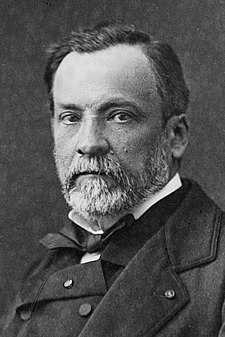
Louis Pasteur
"I have not become the King’s First Minister in order to preside over the liquidation of the British Empire."
Glory and recognition now shifted to individuals. New scientific discoveries in medicine were made by people like Louis Pasteur (he is responsible for all those vacine shots you got as a kid). Charles Darwin made trips out to remote islands in the Pacific Ocean and then wrote the Origin of Species where he laid out the basic ideas in the theory of evolution.
The old motivation of Glory had now turned into something more like Bragging Rights
The old motivation to convert as many people for God had also some of its importance. Missionaries had been motivated to teach savages how to live good moral lives according Christian standards. While the drive to convert people remained, the idea of being superior to the ethnic groups found in the colonies expanded beyond just religion. This eurocentric and ethnocentric perspective was driven by the perception that Europeans were generally more advanced people. European advancement in production, new inventions, scientific discoveries, and sophisticated philosophies reinforced the idea that Europeans were better than other people groups. From that point of view it became the European's responsibility to 'help' the 'backward' people to become more European. A British writer named Ruyard Kipling captured the idea of European responsibility to the rest of the 'savage world'...
Take up the White Man's burden--
Send forth the best ye breed--
Go bind your sons to exile
To serve your captives' need;
To wait in heavy harness,
On fluttered folk and wild--
Your new-caught, sullen peoples,
Half-devil and half-child.

Take up the White Man's burden--

And reap his old reward:
The blame of those ye better,
The hate of those ye guard--
The cry of hosts ye humour
(Ah, slowly!) toward the light:--
"Why brought he us from bondage,
Our loved Egyptian night?"
This poem demonstrates how Europeans considered themselves parents to the other races. Any resistance that Europeans faced from the colonies or other racial groups was seen as the burden they had to bear.
This advertizement for soap shows that cleanliness was seen as something that made white people better than other people groups. It seems crazy to think that a soap company could see itself as helping to 'clean' the dirt of the savages in other parts of the world. But in this eurocentric point of view everyone need to bear the white man's burden.
To the old motivation of God was now added a European or White Man's Burden.
It is easy to criticize the over inflated sense of superiority that dominated European Imperialism. This written response is intended to help you imagine what it would be like to have such a strong eurocentric perspective.

Imagine you are a British doctor who has recently accepted a position in a remote hospital in interior of India in the late 1800s. You have been taught the eurocentric values throughout your schooling. Everything has prepared you to do your duty to help these 'half-devil and half-child' type of people. You have been living in this remote village for several months. Write a letter to your mother and father about your experiences. Remember to tell them about how conditions in your village are different from life back home in England. Also remember to tell them why your work there is so important.

Saturday, March 19, 2011

The Life of a Slave...


Olaudah Equiano, an Ibo from Nigeria, was just 11 years old when he was kidnapped into slavery. He was held captive in West Africa for seven months and then sold to British slavers, who shipped him to Barbados and then took him to Virginia. After serving a British naval officer, he was sold to a Quaker merchant from Philadelphia who allowed him to purchase his freedom in 1766. In later life, he played an active role in the movement to abolish the slave trade.
Kidnapped
(read the entire excerpt here)
shackles used to chain slaves together
One day, when all our people were gone out to their works as usual, and only I and my dear sister were left to mind the house, two men and a woman got over our walls, and in a moment seized us both; and, without giving us time to cry out, or make resistance, they stopped our mouths, and ran off with us into the nearest wood. Here they tied our hands, and continued to carry us as far as they could, till night came on, when we reached a small house, where the robbers halted for refreshment, and spent the night. We were then unbound; but were unable to take any food; and, being quite overpowered by fatigue and grief, our only relief was some sleep, which allayed our misfortune for a short time.
The Middle Passage:
(read the entire excerpt here)
Olaudah Equiano vividly recounts the shock and isolation that he felt during the Middle Passage to Barbados and his fear that the European slavers would eat him.
diagram of slaves packed into ship`s hold
The stench of the hold while we were on the coast was so intolerably loathsome, that it was dangerous to remain there for any time...some of us had been permitted to stay on the deck for the fresh air. But now that the whole ship's cargo were confined together, it became absolutely pestilential. The closeness of the place and the heat of the climate, added to the number of the ship, which was so crowded that each had scarcely room to turn himself, almost suffocated us.
Every circumstance I met with, served only to render my state more painful and heightened my apprehensions and my opinion of the cruelty of the whites.
Arrival in the new world
(read the entire excerpt here)
Olaudah Equiano offers a first- hand account of his arrival in the West Indies in 1756.
waiting to be sold
We were not many days in the merchant's custody, before we were sold after their usual manner...On a signal given, (as the beat of a drum), buyers rush at once into the yard where the slaves are confined, and make a choice of that parcel they like best. The noise and clamour with which this is attended, and the eagerness visible in the countenances of the buyers, serve not a little to increase the apprehension of terrified Africans...In this manner, without scruple, are relations and friends separated, most of them never to see each other again. I remember in the vessel in which I was brought over...there were several brothers who, in the sale, were sold in different lots; and it was very moving on this occasion, to see and hear their cries in parting.
Response:
Olaudah Equiano would not have had access to material to write a diary but imagine what he might have written in his diary if he had had the opportunity. Choose one section of the journey into slavery given above and write a journal entry as if you were Olauda Equiano. This writting task asks you to put yourself in his shoes - to write from his perspective. Remember to support your writing with details from the story or other historical facts you know from this time period.

Thursday, March 17, 2011

Africa: Before Colonies

Based on the two videos we watched in class, answer the following questions:
  1. Based on what you saw in these videos describe what you think a typical day in the life of an African person your age might have been before Europeans set up colonies?
  2. Which sciences were important in helping Europeans get to India by ship?
  3. Opinion: As you saw in the video trading slaves was a common part of life in African society. When Europeans settled they took advantage of this slave trade. How much should we hold Europeans responsible for the way slaves were treated during colonial times?

Tuesday, March 15, 2011

Settlers of Catan: whadjathink?

In order to play Settlers of Catan a player must be familiar with how the idea of scarcity works. Resources in the game need to be combined in specific ways to allow you to build roads, settlements, and cities. To win the game players have to be successful in building their empire. In order to win you have to learn how to trade for resources that you need. This is especially true if a player happens to choose parts of the board whose resources. After watching the videos on the Scramble for Africa (which you can also find here) answer the following questions below:
  1. What connection can be made between playing Settlers of Catan and the Scramble for Africa
  2. What were the main motivations of the European countries in setting up colonies?
  3. What factors contributed to indigenous people being horribly mistreated by Europeans?
  4. In what way could 'settling' Africa have been done in a better way?
Provide a numbered response in the comment section below: